
Backyard Renovation Decoradyard: Complete Planning Guide
- 01 What Makes a Backyard Renovation Successful?
- 02 Create Functional Backyard Zones
- 03 Improve the Backyard With Better Circulation
- 04 Solve Drainage Before Adding Decoration
- 05 Choose Materials for Outdoor Conditions
- 06 Add Privacy Without Making the Yard Feel Closed
- 07 Use Lighting as Part of the Design
- 08 Make Small Backyards Feel Larger
- 09 Add Shade for Better Comfort
- 10 Upgrade Fencing and Boundaries
- 11 Create a Low-Maintenance Landscape
- 12 Add Sustainable Backyard Features
- 13 Budget a Backyard Renovation Properly
- 14 Common Backyard Renovation Mistakes
- 15 A Practical Backyard Renovation Sequence
- 16 How to Make the Renovated Backyard Look Cohesive
- 17 Final Design Checklist
- 18 FAQs About Backyard Renovation
- 19 Conclusion
A successful backyard renovation decoradyard project is about much more than adding attractive furniture, plants, or decorative features. A well-designed backyard should handle weather, drainage, foot traffic, maintenance, privacy, and everyday use while still looking inviting.
Whether you have a compact urban yard or a large outdoor area, the smartest approach is to plan the space before purchasing materials. Start by evaluating the existing ground, sunlight, drainage, access points, and the activities you want the yard to support. From there, you can create practical zones for relaxing, dining, gardening, entertaining, or children’s activities without making the space feel overcrowded.
What Makes a Backyard Renovation Successful?
A backyard renovation works best when appearance and performance are considered together. An attractive patio can become difficult to use if water collects around it, while a beautiful planting scheme may struggle if the plants receive unsuitable amounts of sunlight.
The objective of backyard renovation decoradyard planning should therefore be to create an outdoor environment where the layout, materials, planting, lighting, and drainage work as one system.
Start With a Site Assessment
Before removing anything, inspect the backyard carefully. Note the position of existing trees, utility lines, fences, retaining structures, drainage points, outdoor taps, electrical connections, and areas where rainwater tends to accumulate.
Also observe the yard at different times of the day. A location that appears sunny in the morning may become shaded later, which can influence the placement of seating, vegetable beds, outdoor kitchens, and shade structures.
Measure Before Designing
Accurate measurements prevent expensive mistakes. Record the overall dimensions of the yard and mark permanent features that cannot easily be moved.
Create a basic sketch showing:
- Property boundaries
- Doors and access paths
- Existing trees and structures
- Utility connections
- Drainage areas
- Proposed seating zones
- Planting areas
- Patio or deck dimensions
This simple plan can help you determine how much usable space remains after installing each major feature.
Create Functional Backyard Zones
One of the most effective ways to improve a backyard is to divide it into functional zones instead of filling the entire area with individual decorative items.
A useful backyard renovation decoradyard layout might include a dining zone near the house, a quieter seating area farther away, planting beds along the perimeter, and a clear circulation route between them.
Outdoor Living Area
An outdoor living area can function as an extension of the home’s interior. Depending on the available space, it might contain weather-resistant seating, a coffee table, an outdoor rug, and integrated lighting.
Keep enough clearance around furniture so people can move comfortably. Furniture should not block doors, narrow walkways, drainage channels, or access to maintenance equipment.
Dining and Entertainment Zone
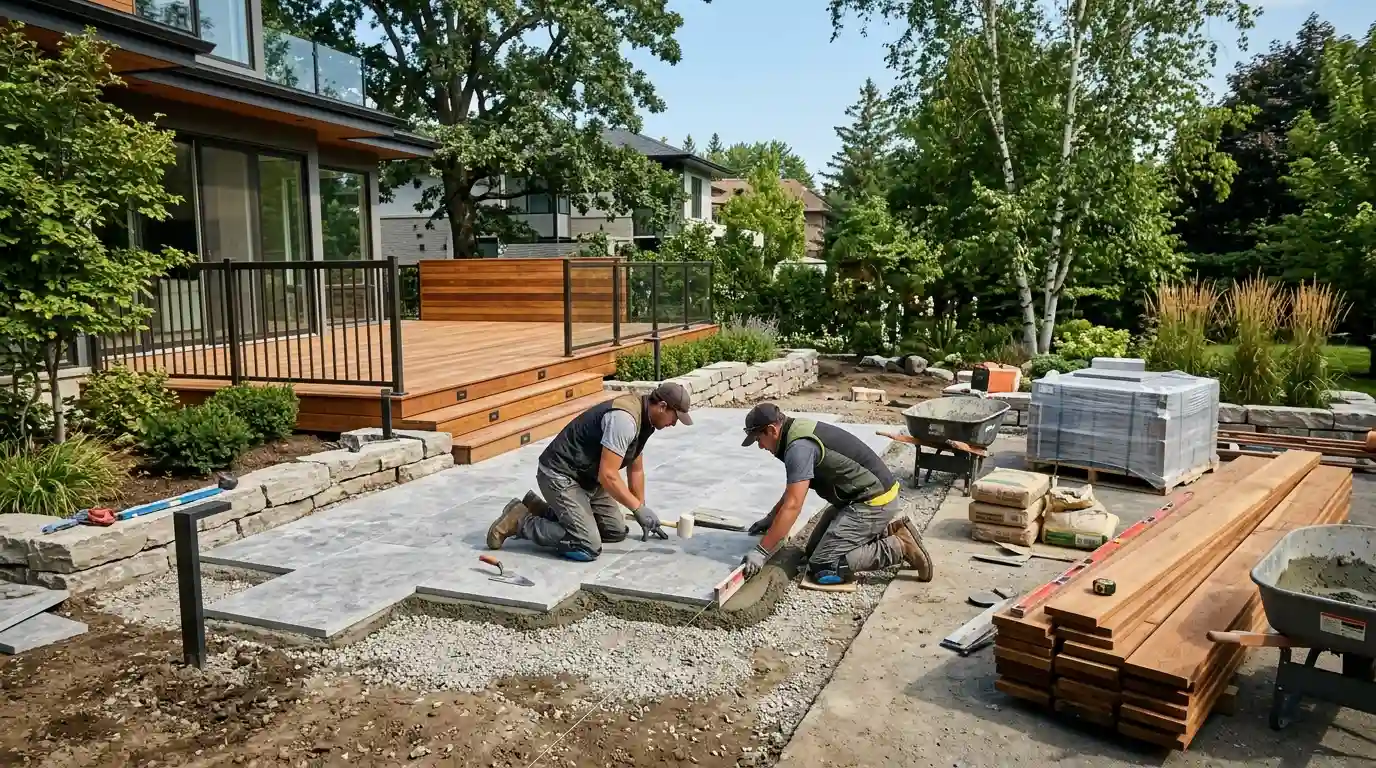
If you frequently eat outdoors, position the dining area where carrying food from the kitchen is convenient. A level surface such as a properly constructed patio provides a more stable foundation than placing furniture directly on uneven soil.
For larger yards, consider separating dining and lounging areas rather than creating one oversized furniture arrangement. Different surface materials, planters, lighting, or subtle changes in elevation can visually define each zone.
Garden and Planting Zone
Planting areas should be planned according to sunlight, soil conditions, water requirements, and mature plant size. Avoid selecting plants solely because they look attractive at the garden center.
Perennial plants, shrubs, ornamental grasses, groundcovers, and small trees can create structure that remains useful throughout different seasons. Native or climate-adapted plants can also reduce irrigation and maintenance requirements.
Improve the Backyard With Better Circulation
A backyard can feel smaller when paths are poorly positioned. People naturally follow routes between the house, seating, garden, storage area, and other frequently used destinations.
Instead of creating decorative pathways that lead nowhere, connect the areas you actually use.
Choose Appropriate Path Materials
Common options include:
| Material | Strengths | Considerations |
| Concrete | Durable and low maintenance | Can look plain without thoughtful design |
| Pavers | Easy to repair and visually flexible | Requires a stable base |
| Gravel | Relatively simple and permeable | Can shift under heavy traffic |
| Natural stone | Distinctive appearance | Installation and material costs can be higher |
| Composite decking | Consistent appearance and low routine maintenance | Can become hot in strong sunlight |
The correct choice depends on climate, budget, drainage requirements, expected traffic, and the style of the home.
Solve Drainage Before Adding Decoration
Drainage is one of the most commonly overlooked aspects of backyard remodeling. Decorative improvements cannot compensate for a yard that repeatedly holds standing water.
During a backyard renovation decoradyard project, identify where rainwater naturally flows before installing patios, retaining walls, garden beds, or other permanent structures.
Use Proper Surface Slope
Hardscape surfaces need sufficient slope to move water away from buildings and toward an appropriate drainage location. The exact slope depends on the material and construction method, so local building requirements and professional installation guidance should be followed.
Avoid directing runoff toward foundations, neighboring properties, or areas where erosion could occur.
Consider Permeable Surfaces
Permeable pavers, gravel systems, and appropriately designed planting areas can allow more rainwater to infiltrate the ground instead of sending all runoff across hard surfaces.
This can be particularly useful when a backyard contains a large patio or other extensive hardscape.
Choose Materials for Outdoor Conditions
Indoor materials do not automatically perform well outside. Outdoor surfaces experience ultraviolet exposure, temperature changes, moisture, dirt, insects, and repeated wet-dry cycles.
A durable backyard renovation decoradyard should use materials selected according to their environmental exposure rather than appearance alone.
Patio and Paving Materials
Concrete, porcelain pavers, brick, natural stone, and manufactured pavers can all work in outdoor environments when correctly specified and installed.
Consider surface texture as well as appearance. A very smooth surface may become uncomfortable or slippery in wet conditions, while heavily textured materials can be harder to clean.
Decking Materials
Traditional wood decking can provide a warm appearance but requires periodic maintenance. Composite decking generally reduces routine staining and sealing, although its heat retention and expansion characteristics should be considered in hot climates.
The substructure is equally important. Poor ventilation, inadequate drainage, or unsuitable framing can shorten the life of an otherwise high-quality deck.
Add Privacy Without Making the Yard Feel Closed
Privacy can dramatically improve the usability of an outdoor space. However, installing a solid wall around the entire yard may make a small area feel enclosed.
Instead, combine different layers of privacy.
Layered Privacy Solutions
Tall shrubs can soften boundaries while fences provide a more immediate visual barrier. Trellises, climbing plants, screens, pergolas, and strategically positioned trees can create additional separation without producing a completely closed environment.
The height and location of privacy features should also consider neighboring views, sunlight, wind movement, and local regulations.
Use Lighting as Part of the Design
Outdoor lighting should provide safety and atmosphere rather than simply making the entire backyard bright.
A strong lighting plan combines several levels:
- Path lighting for circulation
- Step lighting for changes in elevation
- Task lighting near cooking or dining areas
- Accent lighting for trees and architectural features
- Low-level ambient lighting around seating areas
Warm, controlled lighting is generally more comfortable around living spaces than excessive high-intensity illumination.
Improve Energy Efficiency
LED fixtures are useful for outdoor applications because they typically consume less electricity and offer long operating life. Timers, photocells, and smart controls can prevent lights from remaining on unnecessarily.
When installing permanent electrical fixtures outdoors, use equipment and installation methods appropriate for outdoor exposure and follow applicable electrical requirements.
Make Small Backyards Feel Larger
A limited backyard does not need to feel cramped. The key is to prioritize multifunctional features and preserve visual openness.
Instead of installing separate furniture for every activity, select pieces that can serve multiple purposes. A bench can provide seating while incorporating storage, and a compact dining table can double as a workspace.
Use Vertical Space
Vertical gardening is particularly valuable where floor area is limited. Wall-mounted planters, trellises, climbing plants, and narrow planting beds can introduce greenery without consuming much usable floor space.
However, vertical installations should be securely anchored and designed to withstand wind and the weight of mature plants.
Keep the Center Open
In small yards, placing too many objects in the middle can visually divide the space. Perimeter planting, compact furniture, and clearly defined pathways can make the central area feel more spacious.
Add Shade for Better Comfort
A backyard that looks attractive but becomes unusable in strong sunlight has a design problem.
Shade can be provided through mature trees, pergolas, retractable awnings, shade sails, umbrellas, or covered structures. The best option depends on the size of the space and whether you need seasonal or permanent protection.
Consider Sun Direction
Observe where direct sunlight falls during the hours when the backyard is most frequently used. A shade structure positioned according to the afternoon sun can be more useful than one placed solely according to the visual layout.
Natural shade from trees also provides ecological benefits, although tree roots, mature canopy size, maintenance, and proximity to structures must be considered before planting.
Upgrade Fencing and Boundaries
Fencing is both a functional and visual component of backyard design. Damaged or poorly maintained fencing can make an otherwise renovated yard look unfinished.
Before replacing a fence, check whether repair is possible. If replacement is necessary, select a material that suits the home’s architecture and local environmental conditions.
Wood, metal, masonry, vinyl, and composite systems each have different maintenance requirements and lifespans.
Create a Low-Maintenance Landscape
A low-maintenance backyard does not mean a backyard without plants. It means designing the landscape so routine care is manageable.
Group plants according to similar water and sunlight requirements. This makes irrigation more efficient and prevents one plant’s needs from forcing unnecessary watering of the entire bed.
Reduce Unnecessary Lawn
Large lawn areas require regular mowing and often significant irrigation. Replacing portions of lawn with planting beds, permeable paths, groundcovers, gravel areas, or outdoor living spaces can reduce maintenance while making the yard more functional.
The appropriate balance depends on how the household actually uses the space.
Add Sustainable Backyard Features
Sustainability can be incorporated without sacrificing appearance.
Rain gardens, composting areas, permeable paving, native plants, rainwater management, efficient irrigation, and durable materials can all contribute to a more resource-conscious landscape.
Improve Irrigation Efficiency
Water plants according to their actual needs rather than following a fixed schedule that ignores rainfall and seasonal changes. Drip irrigation or targeted watering can deliver moisture closer to plant roots and reduce unnecessary evaporation.
Mulching planting beds can also help moderate soil moisture and temperature while reducing weed growth.
Budget a Backyard Renovation Properly
A realistic budget should include more than the visible finishing materials. Excavation, demolition, drainage, base preparation, labor, delivery, electrical work, planting, permits, and waste removal can significantly influence the final cost.
For a backyard renovation decoradyard project, divide expenses into essential infrastructure and optional aesthetic upgrades.
Prioritize Structural Work
If funds are limited, deal with drainage, grading, unstable surfaces, unsafe structures, and damaged retaining walls before purchasing decorative accessories.
A decorative feature can be added later, but correcting a failed foundation or drainage system after installation may require removing finished work.
Build in a Contingency
Outdoor renovation projects can reveal hidden problems after excavation begins. Existing roots, buried debris, poor soil, damaged drainage pipes, or unexpected grading conditions may increase costs.
Keeping a contingency allowance gives you flexibility when these issues appear.
Common Backyard Renovation Mistakes
Many outdoor projects become expensive because design decisions are made in the wrong order.
Designing Before Understanding the Site
A beautiful concept can fail when it ignores drainage, sunlight, soil, access, or existing structures. Site analysis should come before detailed decoration.
Choosing Materials Only by Appearance
A material that looks impressive in a photograph may not be appropriate for heavy traffic, extreme weather, moisture, or strong sunlight.
Always consider performance, maintenance, installation requirements, and expected lifespan.
Overcrowding the Space
Adding too many planters, furniture pieces, decorative objects, and structures can reduce the usable area. Every major item should have a purpose.
Ignoring Future Growth
Plants and trees should be selected based on their mature dimensions. Installing a tree too close to a building, fence, patio, or utility line can create costly problems later.
A Practical Backyard Renovation Sequence
A logical construction sequence can prevent finished areas from being damaged during later work.
Step 1: Inspect and measure the existing yard.
Step 2: Identify drainage, grading, utility, and structural problems.
Step 3: Establish the overall layout and functional zones.
Step 4: Remove unwanted structures, vegetation, or damaged surfaces.
Step 5: Complete grading and drainage improvements.
Step 6: Install underground utilities and necessary infrastructure.
Step 7: Build patios, paths, decks, retaining structures, or other hardscape.
Step 8: Install fencing, shade structures, and permanent features.
Step 9: Complete planting and irrigation.
Step 10: Add furniture, lighting, accessories, and final decorative details.
Following this sequence reduces the likelihood that heavy construction will damage completed landscaping or finished surfaces.
How to Make the Renovated Backyard Look Cohesive
A cohesive backyard does not require every item to match. Instead, repeat a limited number of materials, textures, shapes, or colors throughout the space.
For example, the same paving material can connect a patio with a pathway, while similar metal finishes can visually link lighting fixtures, furniture frames, and fencing.
Balance Hardscape and Softscape
Hardscape includes constructed features such as patios, walls, pathways, decks, and structures. Softscape includes plants, soil, lawn, and other living elements.
A successful design balances both. Too much hardscape can make a backyard feel harsh, while excessive planting without clear circulation can make the area difficult to use.
Final Design Checklist
Before considering the project complete, review the backyard from both practical and visual perspectives.
Ask yourself:
- Does rainwater move away from structures?
- Are pathways comfortable and safe?
- Is there enough usable seating?
- Does the outdoor furniture suit the space?
- Are plants positioned according to their mature size?
- Is there adequate shade?
- Is privacy sufficient?
- Can outdoor lighting be maintained easily?
- Are materials suitable for the local weather?
- Is there enough open space for movement?
- Can the garden be maintained within the available time and budget?
If these questions have clear answers, the renovation is much more likely to remain useful after the initial excitement of the makeover disappears.
FAQs About Backyard Renovation
What should I renovate first in a backyard?
Start with drainage, grading, structural problems, unsafe surfaces, and underground infrastructure. Decorative improvements should come after the fundamental conditions of the site have been addressed.
How can I renovate a backyard on a limited budget?
Prioritize improvements that have the greatest functional impact. Repairing existing structures, reducing unnecessary hardscape, reusing suitable materials, choosing low-maintenance plants, and completing the project in phases can help control costs.
What is the best material for a backyard patio?
There is no single best patio material for every property. Concrete, pavers, natural stone, porcelain, and other systems can work well when their durability, drainage, climate suitability, maintenance, installation requirements, and budget are considered.
How can I make a small backyard look bigger?
Keep the central area relatively open, use multifunctional furniture, create clear pathways, use vertical planting, and limit the number of competing decorative elements. Consistent materials can also make separate areas feel visually connected.
How do I make a backyard easier to maintain?
Choose climate-appropriate plants, group plants according to similar water requirements, use efficient irrigation, mulch planting beds, limit unnecessary lawn, and select durable outdoor materials.
Conclusion
A well-planned backyard renovation decoradyard should improve how the space works as much as how it looks. The strongest results come from solving drainage and structural issues first, creating practical zones, selecting weather-appropriate materials, and using landscaping and lighting to enhance the finished environment.
Instead of treating the backyard as a collection of decorative objects, approach it as an outdoor system. When circulation, shade, privacy, planting, water management, hardscape, and maintenance are considered together, even a modest yard can become a comfortable and long-lasting extension of the home.
More in DIY
Renovation Tips Decoradhouse: A Smarter Guide to Home Renovation
Table of Contents 20 sections Hide 01 Why Renovation Tips Decoradhouse Should Start With Problems, Not Products 02 Build a…
Renovation Tips and Tricks Decoradhouse: Smart Home Renovation Guide
Table of Contents 18 sections Hide 01 Renovation Tips and Tricks Decoradhouse for Smarter Planning 02 Establish a Renovation Budget…
How to Deep Clean Plank Flooring Livpristhome: Easy Guide
Table of Contents 17 sections Hide 01 Why Deep Cleaning Plank Flooring Requires a Different Approach 02 How to Deep…